WELLNESS EDIT | No. 03 |

Granola
Hidden Sugar in “Healthy” Cereals: Why Granola Serving Size Matters
Granola has a healthy reputation, and much of it is deserved. Oats, nuts, seeds, and dried fruit can all provide valuable nutrients. But there is one part of the nutrition label that is particularly easy to overlook: serving size.
A typical serving of granola is often just 1/3 to 1/2 cup. For many people, that is considerably less than what ends up in the breakfast bowl.
That matters because granola is relatively calorie-dense and depending on the product, can also contain a significant amount of sugar. A bowl containing two or three labeled servings means two or three times the calories, sugar, and other nutrients listed for a single serving.
How Much Sugar Is in Granola?
The amount varies considerably between products, which is why both the sugar content and the serving size matter. Many granolas contain added sugars from ingredients such as honey, cane sugar, maple syrup, brown rice syrup, or other sweeteners, while dried fruit can contribute naturally occurring sugar as well.
This doesn’t make granola inherently unhealthy. It simply makes the nutrition label, and particularly the serving size worth paying attention to.
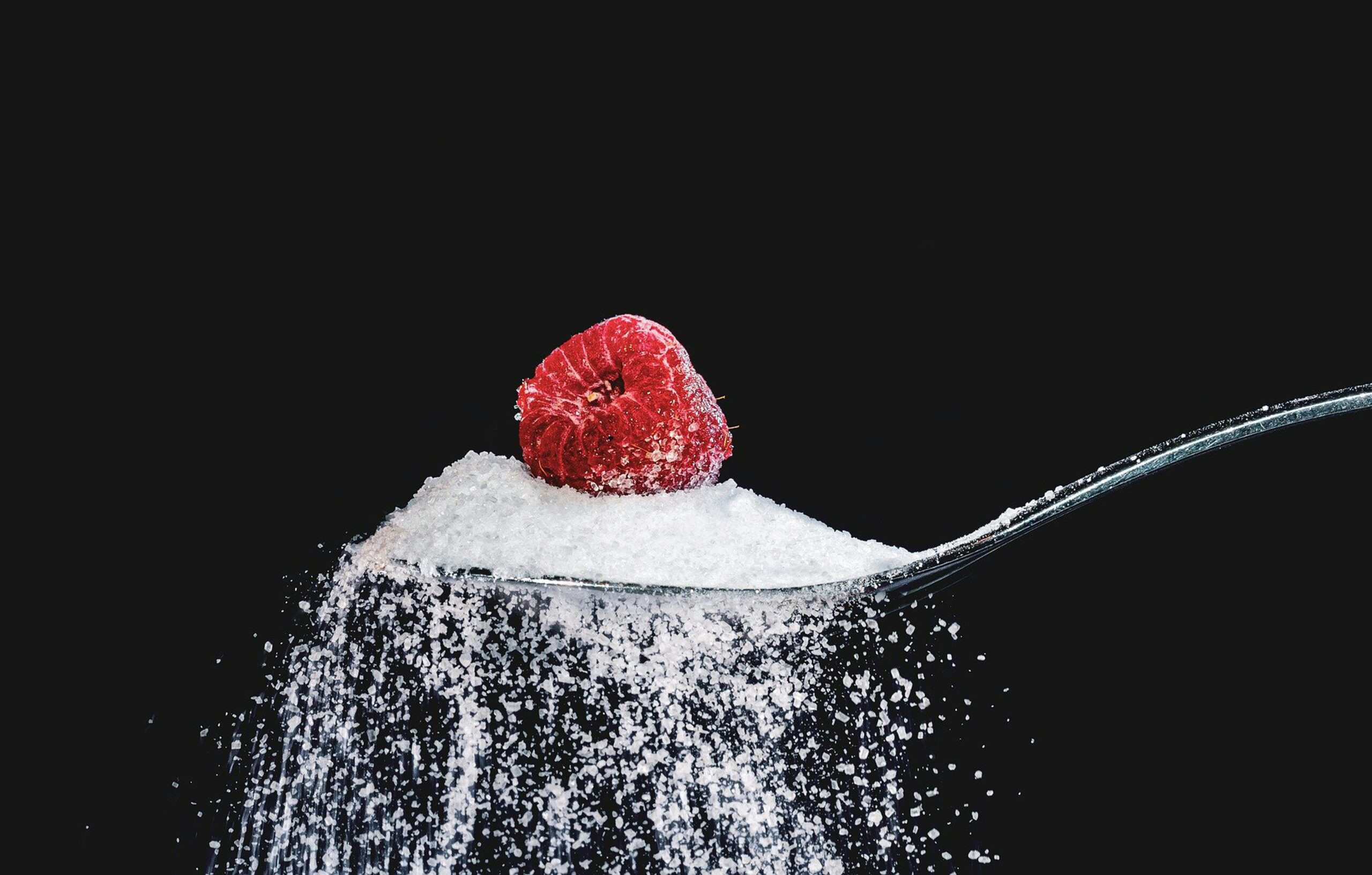
One teaspoon of sugar is approximately 4 grams.
So a granola containing 12 grams of sugar per serving provides the equivalent of approximately three teaspoons of total sugar. If you pour twice the listed serving, you’re consuming 24 grams.
The Serving Size Surprise
One of the easiest mistakes to make with granola is assuming that the amount poured into a cereal bowl represents one serving.
It may not.
Manufacturers determine the nutrition information according to the serving size stated on the package. Depending on the product, that might be 1/3 cup, 1/2 cup, or another amount entirely.
That makes comparing granolas slightly more complicated than simply looking at which product contains the fewest grams of sugar. Always compare the serving size as well.
Granola Cereal Comparison
| Brand | Serving Size | Weight | Calories | Sugar |
|---|---|---|---|---|
| KIND Oats & Honey | ⅓ cup | 30 g | ~130 | 6 g |
| Nature Valley Protein | ½ cup | 52 g | ~250 | 12 g |
| Quaker Simply Granola | ½ cup | 56 g | ~220 | 14 g |
| Bear Naked | ½ cup | 55 g | ~250 | 11 g |
| Purely Elizabeth | ⅓ cup | 30 g | ~140 | 6 g |
| USDA average | ½ cup | ~45 g | ~200 | 10 g |
Looking at nutrition labels side-by-side can be eye-opening. Some granolas contain considerably less sugar than others, but even products marketed as “natural,” “organic,” or “protein-rich” can contribute substantial sugar and calories when the amount eaten is larger than the serving listed on the package.
The takeaway isn’t that granola is unhealthy. It’s that the portion in your bowl matters just as much as the numbers on the label.
How Much Granola Should You Eat?
There isn’t one correct amount for everyone. Your nutritional needs, appetite, overall breakfast, and the particular granola you choose all matter.
The manufacturer’s serving size is useful as a reference point rather than a rule. Measure it once or twice simply to see what 1/3 or 1/2 cup actually looks like. You may be surprised.
If you enjoy a larger breakfast, another option is to use granola as one component rather than filling the entire bowl with it.
A Better Way to Enjoy Granola
I like the idea of using granola as a topping.
A smaller amount sprinkled over yogurt, chia pudding, cottage cheese, oatmeal, or fresh fruit still provides the crunch and flavor people enjoy, while leaving room for foods that provide additional protein and fiber.
You can also add nuts or seeds for texture and nutrients without turning breakfast into a complicated exercise in nutritional perfection.
The point isn’t to meticulously measure granola every morning. It’s simply to know what a serving looks like so you can decide how much you actually want to eat.

What to look for on the label
When comparing granolas, look beyond the front of the package.
Start with the serving size, then look at the amount of added sugar, fiber, protein, and calories provided by that amount. Ingredient lists can also tell you where sweeteners appear and whether several different forms of added sugar have been used.
And compare like with like. A granola containing 6 grams of sugar per 1/3 cup isn’t necessarily lower in sugar than one containing 8 grams per 1/2 cup.
Context matters.
Bottom Line
Granola can absolutely be part of a healthy diet. The important thing is understanding what is actually in your bowl.
Serving sizes are often smaller than people expect, and because granola is calorie-dense and can contain added sugar, pouring two or three servings can change the nutritional picture considerably.
That doesn’t mean granola needs to disappear from breakfast. Sometimes eating well isn’t about eliminating a food. It’s simply about understanding what you’re eating and making an informed choice about how much of it you want.